


Reverse osmosis
Nutrient recovery from digestate: Pilot test experiments
A pilot-scale study tested several technologies to treat biogas digestate— the residue from anaerobic digestion of dairy, animal, and some crop wastes—so that nutrients can be recovered and the material can be reused. The digestate was processed through microfiltration, ultrafiltration, reverse osmosis, selective electrodialysis, and UV/ozonation. Early filtration steps removed over 80% of solids and large organic molecules, while reverse osmosis removed nearly all remaining dissolved substances, producing clean water suitable for reuse. Selective electrodialysis recovered over 95% of ammonium and potassium and about 55% of phosphate, 75% of which was turned into struvite, a valuable fertilizer.
Nutrient-recovery-from-digestate-Pilot-test-experiments.pdfLife Dimitra, il progetto Univr per un mondo agricolo più sostenibile
DIMITRA is a LIFE-funded project led by the University of Verona that develops next-generation bio-fertilisers by recovering nutrients from agricultural waste within a circular-economy framework. The project focuses on upgrading digestate — the nutrient-rich by-product of anaerobic digestion — to prevent pollution and transform it into high-quality fertilising products.
Two demonstration plants in Greece and Italy are testing advanced separation, filtration and reverse osmosis technologies to recover nitrogen, phosphorus and potassium while reducing emissions, odours and water use. The Italian pilot, installed at the La Torre farm, treats about 20 tonnes of digestate per day and produces bio-fertilisers suitable for maize cultivation.
DIMITRA shows how innovative and replicable solutions can convert waste into valuable products, support EU goals on renewable energy and circularity, and strengthen Europe’s autonomy in agricultural fertiliser production.
Read the full article here
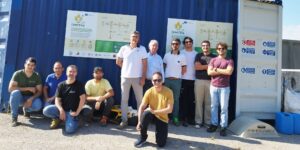
Valorization of the liquid fraction of digestate by means of membranes
The article describes a pilot-industrial system developed by SIGMA Water Group in Spain for the treatment of the liquid fraction of digestate from a biogas plant co-digesting cattle manure and fruit residues. Through ultrafiltration (UF) followed by reverse osmosis (RO), the liquid digestate is separated into a purified water stream and a nutrient-rich concentrate. The purified water meets high quality standards, while the concentrate is valorised as an agricultural product (potential fertiliser or soil application). The system demonstrates the feasibility of membrane technologies for digestate valorisation at scale and contributes to closing nutrient loops while reducing environmental impacts.
Read the full article here
Nutri2Cycle Nurturing the Circular Economy
The Nutri2Cycle project will assess the current Nitrogen (N), Phosphorus (P) and Carbon (C) flows looking into existing management techniques in different farms across Europe and analysing their related environmental problems.
https://www.nutri2cycle.eu/
Nutrient Recovery from Biogas Digestate by Optimised Membrane Treatment
Biogas plants produce digestates rich in nutrients, yet their uneven distribution across Germany creates challenges for responsible fertilizer use and transport. A membrane-based processing chain—using centrifugation, ultrafiltration, and reverse osmosis—can convert these digestates into separate nutrient products and reusable water, but the high energy demand, particularly in ultrafiltration, remains a major constraint. By examining digestates from numerous biogas plants, this study shows that filtration performance is strongly influenced by the liquid-phase properties and biopolymer content. Enzymatic pre-treatment significantly improved ultrafiltration efficiency, achieving nearly triple the filtration rates and reducing energy consumption by around 45%. These gains enhance the overall feasibility of membrane-based digestate treatment and support its broader deployment.
Nutrient-Recovery-from-Biogas-Digestate-by-Optimised-Membrane-Treatment.pdf