


Nutrient recovery
A study case on the use of digestate as bio fertilizer: characterization and environmental assessment
A recent practice abstract highlights the growing potential of digestate as a biofertiliser within sustainable and circular agriculture systems. Field-scale trials comparing digestate with mineral fertilisers show that digestate can achieve comparable, and in some cases higher, crop yields, while supporting nutrient recycling and reducing reliance on synthetic inputs . The study also introduces important innovations at process level, such as ammonia stripping to recover ammonium sulphate and improve both fertiliser quality and process efficiency. At the same time, it identifies key operational considerations, including emission management, nutrient dynamics, and application techniques, noting that practices like soil injection can significantly reduce odour and environmental impact. The findings underline a clear strategic direction: digestate should not be treated as a by-product, but as a refined, regulated fertiliser solution integrated into precision agriculture systems. Moving forward, combining technological upgrading, proper nutrient management, and supportive regulatory frameworks will be critical to unlocking its full potential and enabling wider adoption in mainstream agricultural markets.
Nutrient Removal and Recovery from Digestate: A Review of the Current Knowledge
Digestate is a byproduct of anaerobic digestion, which can be considered waste or a product of potential use for the chemical industry or agriculture. In either case, the digestate must usually be treated prior to being disposed of or valorized. This review describes digestate processing technologies and their specific characteristics. Nutrient recovery and removal from digestate can be achieved through mechanical, physicochemical or biological processes. Available and potential digestate treatment techniques are presented. The complexities of the technologies available, legislation, the agronomical value of the digestate and the economic value of the process mean a decision support tool is required to help managers choose the best digestate processing technology. To ensure adequate analysis, the whole biomethanization project should be integrated in the use of these decision support tools. The objectives and limits of some of the currently available tools are analyzed at the end of this review.
Nutrient recovery from digestate: Pilot test experiments
A pilot-scale study tested several technologies to treat biogas digestate— the residue from anaerobic digestion of dairy, animal, and some crop wastes—so that nutrients can be recovered and the material can be reused. The digestate was processed through microfiltration, ultrafiltration, reverse osmosis, selective electrodialysis, and UV/ozonation. Early filtration steps removed over 80% of solids and large organic molecules, while reverse osmosis removed nearly all remaining dissolved substances, producing clean water suitable for reuse. Selective electrodialysis recovered over 95% of ammonium and potassium and about 55% of phosphate, 75% of which was turned into struvite, a valuable fertilizer.
Nutrient-recovery-from-digestate-Pilot-test-experiments.pdfLife Dimitra, il progetto Univr per un mondo agricolo più sostenibile
DIMITRA is a LIFE-funded project led by the University of Verona that develops next-generation bio-fertilisers by recovering nutrients from agricultural waste within a circular-economy framework. The project focuses on upgrading digestate — the nutrient-rich by-product of anaerobic digestion — to prevent pollution and transform it into high-quality fertilising products.
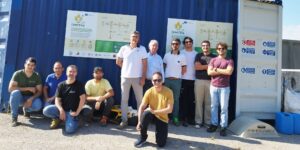
Two demonstration plants in Greece and Italy are testing advanced separation, filtration and reverse osmosis technologies to recover nitrogen, phosphorus and potassium while reducing emissions, odours and water use. The Italian pilot, installed at the La Torre farm, treats about 20 tonnes of digestate per day and produces bio-fertilisers suitable for maize cultivation.
DIMITRA shows how innovative and replicable solutions can convert waste into valuable products, support EU goals on renewable energy and circularity, and strengthen Europe’s autonomy in agricultural fertiliser production.
Read the full article here
Nutrient Recovery by Biogas Digestate Processing
This report reviews various approaches for processing of biogas plant digestate for the purpose of nutrient recovery. It covers both established and emerging technologies and assesses technical performance and where possible economics. Techniques for nutrient recovery from digestate are developing rapidly and aim to improve nutrient management in agriculture and in waste treatment systems.
The report is aimed at biogas plant developers and operators as well as agriculture policy makers and was produced by IEA Bioenergy Task 37. IEA Bioenergy Task 37 addresses challenges related to the economic and environmental sustainability of biogas production and utilisation.
Read the full report here
Treatment of Manure and Digestate Liquid Fractions Using Membranes: Opportunities and Challenges
This review examines how membrane technologies can be used to process nutrient-rich manure and digestate liquids, which often cause membrane fouling due to their high content of organic matter, solids, and mineral compounds. It summarizes the key physico-chemical properties of these effluents and explains how different solid–liquid separation methods interact with these complex variables. The paper outlines the major factors influencing membrane fouling, along with approaches for inspecting membranes and analyzing foulants. It also discusses how feed characteristics, operating conditions, pH control, flocculation–coagulation, and cleaning strategies affect system performance. Finally, it highlights techniques for recovering nutrients such as ammonia-nitrogen and phosphorus, as well as removing heavy metals from farm effluents.
Treatment-of-Manure-and-Digestate-Liquid-Fractions-Using-Membranes-Opportunities-and-Challe.pdfELLIPSE – Efficient and Novel Waste Streams Co-Processing to obtain Bio-Based Solutions for Packaging and Agricultural Sectors
ELLIPSE project will address the valorisation of two heterogeneous waste streams generated in significant amounts in Europe, slaughterhouse waste (bellygrass or rumen content) and paper and pulp sludge, to produce cost-efficient polyhydroxyalkanoates (PHAs) for agricultural and personal care applications, by the coprocessing with other organic wastes (OW) such as sludge from the dairy industry and glycerol from the biodiesel industry, as well as recovering nutrients to produce bio-based fertilizers (BBFs).
https://ellipse-project.eu/Digestate_100% – Innovative integrated system for digestate use in fertigation
Development of an innovative integrated system for digestate treatment and use in fertigation, with the aim of optimizing the agronomical use of digestate from agricultural biogas plants fed by crops and livestock manure.
https://eu-cap-network.ec.europa.eu/projects/digestate100-innovative-integrated-system-digestate-use-fertigation_enNutrient Recovery from Biogas Digestate by Optimised Membrane Treatment
Biogas plants produce digestates rich in nutrients, yet their uneven distribution across Germany creates challenges for responsible fertilizer use and transport. A membrane-based processing chain—using centrifugation, ultrafiltration, and reverse osmosis—can convert these digestates into separate nutrient products and reusable water, but the high energy demand, particularly in ultrafiltration, remains a major constraint. By examining digestates from numerous biogas plants, this study shows that filtration performance is strongly influenced by the liquid-phase properties and biopolymer content. Enzymatic pre-treatment significantly improved ultrafiltration efficiency, achieving nearly triple the filtration rates and reducing energy consumption by around 45%. These gains enhance the overall feasibility of membrane-based digestate treatment and support its broader deployment.
Nutrient-Recovery-from-Biogas-Digestate-by-Optimised-Membrane-Treatment.pdf- 1
- 2